
Morning Routines That Teach: How to Build Responsibility from Wake-Up
July 18, 2026
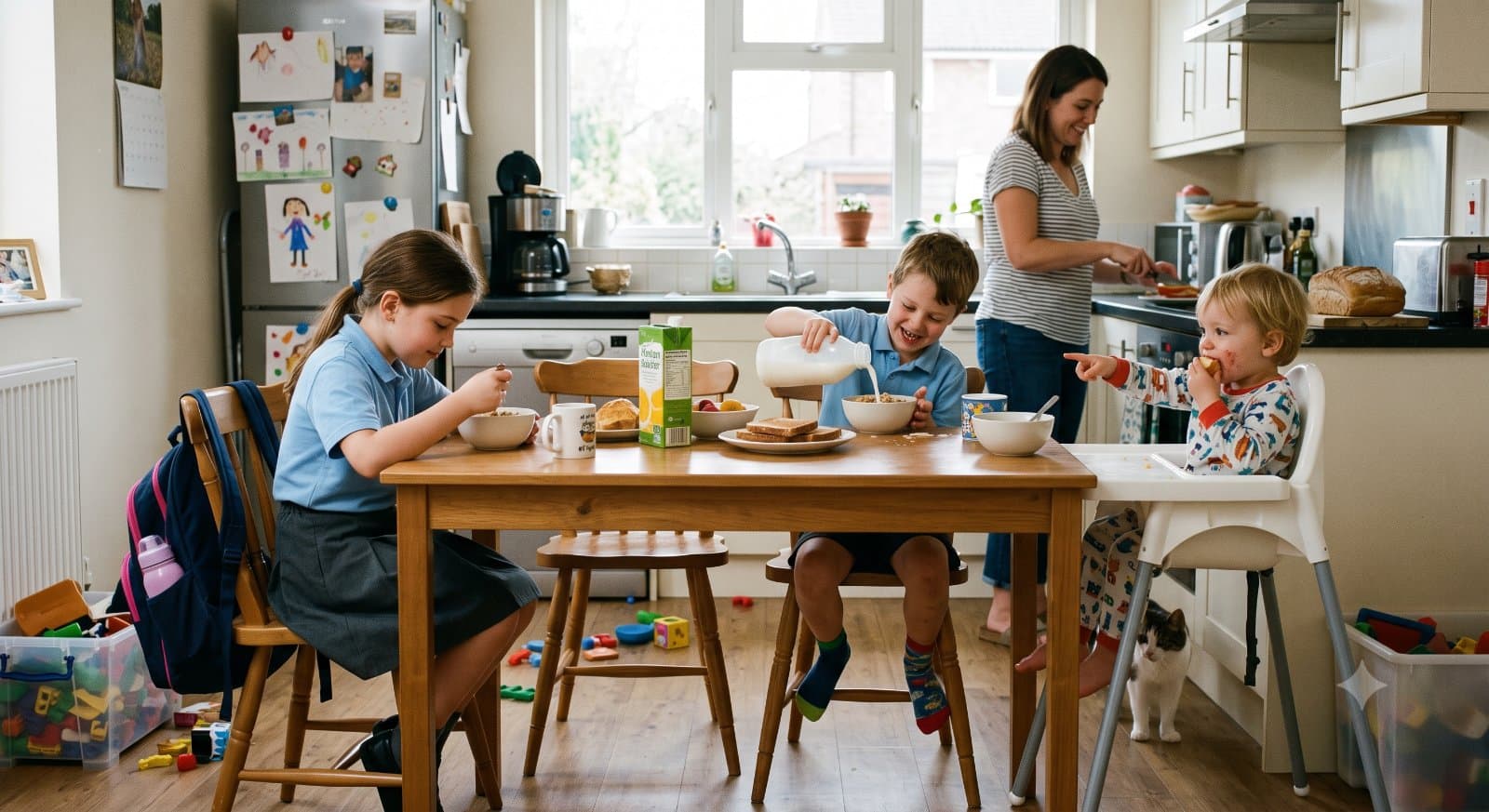
Why morning routines matter more than you think
The first hours of the day set the tone for everything else. When your kids have a clear morning routine, they don't just make it to school on time: they learn that actions have consequences, that responsibility is built step by step, and that teamwork makes life easier for everyone.
A consistent morning routine reduces family stress, avoids last-minute shouting, and creates a space where your kids can practice self-discipline naturally.
The foundations of an effective morning routine
Before thinking about specific tasks, you need these three pillars:
A consistent wake-up time. Even on weekends, keeping similar schedules helps your kids' bodies adapt. It's not rigidity — it's rhythm.
A clear visual flow. Kids respond better when they can see the order of things. It could be pictures, a board, or a list. Something that says: wake up first, then bathroom, then breakfast, then getting dressed.
Realistic timing. If your 7-year-old needs 25 minutes to get dressed, don't give them 10. Plan generously to avoid unnecessary pressure.
Age-appropriate tasks: what kids can really do
Ages 4 to 6
This is the perfect age to start. They can:
- Wash their face and hands (with a reminder)
- Brush their teeth (supervised)
- Help choose the day's outfit (from two options you've already picked)
- Bring their plate to breakfast
The secret: turn it into a game. "Who gets to the bathroom first?", "How many times can you brush?" Young kids respond to fun.
Ages 7 to 10
They've gained independence. Expect them to:
- Get up on their own (with an alarm or visual clock)
- Get fully dressed unsupervised
- Pack their own backpack
- Brush teeth and hair
- Help with breakfast or cooking
The key shift: real responsibility starts here. If they forget their lunch, that's a learning consequence, not a disaster you need to fix.
Teenagers
They should be almost fully autonomous by now:
- Waking up without help
- Showering, dressing, grooming without reminders
- Making their own breakfast
- Checking their own schedules and pending tasks
This is also the age to teach them that their morning choices affect the rest of the family. If someone showers for 45 minutes, others are left waiting.
How to use HeyFamily to sustain the routines
Creating the routine is one thing; getting everyone to remember it is another. HeyFamily lets you create visual routines that appear on your kitchen screen or family tablet. Every family member sees exactly what to do and in what order.
You can add morning checkpoints: breakfast done, backpack ready, teeth brushed. Kids who see themselves ticking off tasks learn to self-monitor. And you stop being the only routine enforcer.
If you have a rewards system, you can connect it too: "If you complete your morning routine without reminders five days in a row, you earn extra screen time on the weekend."
Practical tips that actually work
Prep the night before. Clothes are already chosen, breakfast is already planned. Fewer morning decisions = less friction.
Be consistent, but flexible. If Tuesday you need to leave 10 minutes later, that's fine. Just make it the exception, not the rule.
Celebrate effort, not perfection. "I see it took you a bit longer today, but you got it all done. Maybe a little faster tomorrow." This teaches improvement without guilt.
Involve your kids in designing the routine. If they help create the rules, they follow them with less resistance.
Use visual timers. Some kids respond better to seeing how much time is left than to hearing "hurry up."
The end goal: independence, not perfection
Morning routines aren't about making everything perfect or about you having total control. They're about your kids learning to take care of themselves, respect the family's rhythm, and understand that personal responsibility is a superpower.
When a routine is well established, mornings stop being a battle. They become a space where your family works as a team.
Ready to organize your home without the chaos?
Calendar, tasks, routines and weekly menu on one shared family screen.
Try HeyFamily for freeMore articles
Family Screen: Your Secret Weapon for Home Organization
Discover how a shared screen in the kitchen or living room can transform the way your family stays organized. From schedules to shopping lists, everything visible to everyone.
Morning Routines for Kids: How to Make Mornings Peaceful
Discover how to build effective morning routines that get your family out the door without stress. Practical tips to help kids prepare independently and confidently.
Gamification and Rewards: How to Motivate Kids Without Bribes
Discover how to use gamification at home so your kids tackle chores with enthusiasm. Practical strategies that work and common mistakes to avoid.